Brutes, p.1
Brutes, page 1


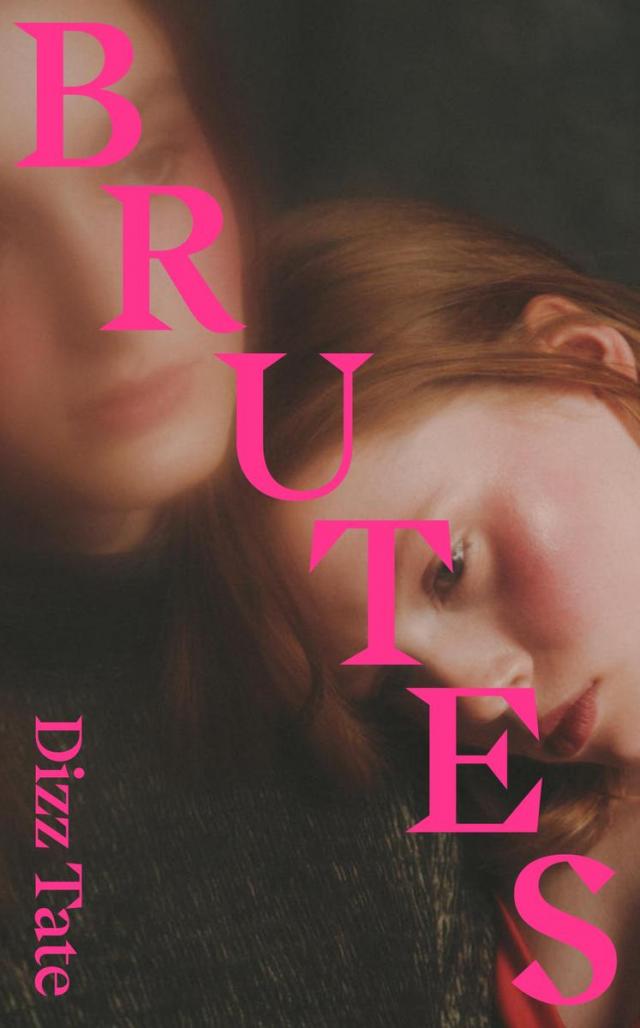
Dizz Tate
Brutes
We dug a hole. Our white hair warmed around the thing, we asked, is this a genesis?
No, we agreed, the thing was not a genesis. A genesis is when he sweeps across the water.
We nodded. It rustled. We stood closer to each other, we asked, what is this, a stillness?
We watched it from a distance, we agreed, the thing was not a stillness.
SABRINA ORAH MARK
Contents
Title Page
Epigraph
1
2
3
4
5
Hazel
6
Britney
7
8
9
10
11
Leila
12
Isabel
13
Christian
14
15
16
Jody
Acknowledgements
About the Author
Copyright
1
‘Where is she?’
We imagine her mother asking first. She will say it once, quietly, standing in Sammy’s bedroom doorway. She will see the flat bed. The quivering screen, ripped back from the window. The second time she asks her voice will shake, and the third time it will rise and turn ragged.
Her father will run to the room and he will ask the question, too. ‘Where is she?’ At first, his voice will be small, like our little sisters’ voices when they come to crawl into our beds, when their dreams will not let them loose. The second time he asks it will be demanding, like the room is a person refusing to tell him what it knows. The third time he will be on the phone, and his voice will have settled into the one he uses to preach in church, a respectful voice, a calm voice, even when he describes the devil and all the details of hell.
The question will spread through the phone lines and cause men to move from their chairs and into their cars.
Sammy’s mother will call her mother, and the women she trusts around town, and though they will not repeat the question back to her, they will hang up and call others, or they will even run and knock on neighbours’ doors because the question is impatient, it cannot wait for the whining of rings. We imagine the question rippling out of Sammy’s house, out of Falls Landing, leaking onto the highway, over the ruins of the construction site, spreading up our apartment towers. Even the lake seems to bristle, the question tickling its surface as it moves like a first, threatening wind.
Night stains the sky slowly, then all at once.
We watch like we have always watched.
Soon we see the blue streaks of sirens. Cop cars wind down the highway, one after the other. We watch them twirl down the exit ramp and speed around the right shore of the lake. They thread through the Falls Landing gate and disappear. We can see the roof of Sammy’s house beyond the white walls, strobing from darkness to blue, darkness to blue. We imagine the cops moving toward her door, their heavy hands knocking, and the twisted faces of her parents, as her mother clutches her father, and her father clutches the frame of the door. We imagine the neighbours’ children waking to see alien illuminations on their bedroom walls, blue messages that seem to summon their parents, who rush to check that the children are safely breathing in their beds.
Our hands shiver and our binoculars shake. We force ourselves to focus.
Figures begin to drift out of the Falls Landing gate. Some are alone, others huddle in groups. They are not women we know, but we recognise them, like women we have seen in the background of movies, or our dreams. They are built for church, in skirt-shorts and pastel-coloured sweaters. They have flashlights strapped to their foreheads so we cannot make out their features. Their faces are circles of light, like unfinished pictures. They march across the construction site and toward the lake as though they plan to conquer it. Some scrape at the dirt with long metal poles. Others have shovels and pitchforks. They poke and stab and spike our ground. They walk as far as the lip of the lake, and some hold their instruments above its surface, but we are satisfied that not one of them dares to disturb the stillness of the water. The lake is dark, indivisible from the low, starless sky, illuminated occasionally by the theme parks’ swerving spotlights. A small moon leaks across the water, vague as a pool light.
We track the paths of the women. They do not hesitate, they walk smoothly. They do not seem afraid and we resent this in strangers. They cluster on the construction site, prising up the foundations of the unbuilt houses, peering under forgotten tarps and rotting planks and pallets. They knock their way into the single finished show home, their noses wrinkled, their flashlight beams passing swiftly across the needles, the wine bottles, the stained mattress. Since the roof blew off in a hurricane and the workers left, the show home is a well-known place for love. After it was abandoned, someone dragged in a mattress and strung a tent above it with jumper cables to protect it from the rain. The tent is thin and we have looked down on the shapes and shadows of bodies meeting there for years, watching as they come together and peel apart. Like guardian angels, we watch politely from our windows, but the searching women do not seem to want to bless the place. There is judgement in every move they make. They scrape the surfaces with their flashlight beams, find nothing and leave the door rudely open.
Two women march further, keeping to the lake’s edge, past our apartments and toward the wild place lot, the place even we do not dare to go. We swing our binoculars to the left to follow them. The round glare of a flashlight reveals the warning sign on the wire fence that surrounds the wild place, the electrocuted man with crosses for eyes and sparks for hair. The tall grass beyond the fence is thick as a wall. We watch one of the women lick her thumb and test a diamond of wire. Her hand jerks. We laugh silently. We can almost see the electric jolt minnow its way through her big, disbelieving bones.
Their search is determined and choreographed, and watching them, it is like we can hear their thoughts, loud as a chant. ‘Where is she?’ ‘Where is she?’ ‘Where is she?’ They are toneless and militant and sure.
We track the women carefully, but soon the night closes round so tightly that we begin to lose them. We chase their flashlights. In the quick, lit circles, we see a stray cat baring its teeth, the end of a snake tail, the glint of Eddie’s abandoned ladder, but the scene is like a dark screen with the occasional burst of clear pixels.
We resist sleep but it tugs our eyes down, the same way it does when we vow to stay up all night at sleepovers, but coffee and scary movies just give us bad stomachs and strange dreams. We sit cross-legged at our windows, our heavy heads slumped against the glass. The action starts to skew. The bright, faceless women rise into the air like space walkers. Ladders hang loose, caught on the fabric of the sky. The women leap up to grab the rungs. They open their mouths as if to speak to us, but we only hear the screeching of the stray cats, fighting their nightly battles between our apartment blocks.
When we wake up, the sun has just appeared, a thick red muscle bleeding low across the lake. We rub our eyes and stare. The women have returned to the ground. The hot air blurs around them. They seem deflated and move slowly through the morning’s pink haze. They have abandoned their instruments and seem to be calling her name over and over. They look desperate, their determination lost. We giggle. We focus our binoculars on their mouths, the lowering and widening of their pleading jaws. ‘Sam-my, Sam-my, Sam-my.’ We can hear more sirens on the highway, and the faint noise of tourists let loose from the hotels and into the theme parks across the lake.
Our mothers lean over us in our beds, and we let our eyes flutter beneath their cool hands. We like the smell of their hangovers, the tang of liquor and limes.
‘Something’s happened,’ they say.
‘What?’ we whisper.
‘The preacher’s daughter. That little girlfriend of Eddie’s. They can’t find her.’
We keep our eyes closed. Little girlfriend. We roll our eyes behind our lids.
‘The one with the short hair. What’s her name?’
The one with the short hair! Our mothers are so innocent. They don’t know anything about our fierce attachments, our hatching hearts.
‘Sammy,’ we say. We try to keep our voices still.
‘We’ve made coffee,’ they say.
‘We’ll explain everything,’ they say.
We nod and shoo them to the door.
We return to our windows as soon as the door clicks shut. The construction site below has transformed into a carnival. Tents have been raised up around the show home. Plastic trash buckets full of ice and bottled water are positioned along the Falls Landing wall. Trucks are parked up along the road to the highway, their beds a tangle of metal detectors, walking sticks, paper and tape. The women remain, not as many as we thought, only a dozen or so, new pink t-shirts donned as a uniform. They look bright and shapeless, sprung from a multipack. They squat in front of the flaps of their tents, warming coffee over campfires or brushing their teeth, rinsing and spitting over distressed grass. We see the sheriff parked up by the Falls Landing gate, clutching his hand radio like a kid told to stay in the corner. Even through the glass of our windows, we can hear faint voices we recognise, voices from other apartments, our mothers and grandmothers on the balconies. Some balance phones to their ears with one shoulder, a trick they learned when we were babies and always wanted to be held. Some shout across to their neighbours. We can’t make out the words but we know they are saying, ‘Where is she?’ Or they are using other wo
We go into our kitchens, the linoleum-lined corners that set off the kitchens from the brown carpet of the main rooms. We pour our coffee from the pot. We add French Vanilla creamer. Three sugars. The television plays in the background on mute. We see the usual stories, the nightly fires that have been set around town all summer, small enough that they burn themselves out, leaving only smashed glass and scorch marks. The workers are still striking outside the ringed fence of the fertiliser factory, slouched on crates, angel wings of sweat sprouting between their shoulder blades. They show pictures of the little girl who got her leg chewed off by an alligator near the golf course lake, some new footage of her mother taking selfies minutes before. Then a photo of Sammy appears, a recent photograph with her shaved head, a new piercing large in the whorl of her left ear. The word BREAKING appears at the bottom of the screen, and the anchors shuffle their papers faster. Then there is a shot of her father at one of his rallies, his large hands pressed together and raised.
Our mothers reach over and extinguish the screen.
We sit and signal for them to begin.
‘We don’t know all the details,’ they say. ‘Still daylight and she was gone. Nothing taken with her, everything exactly the same except the screen was torn in her bedroom window.’
We nod, blow on our coffee. We understand what our mothers are saying. Sometimes when we wait for them to pay in the grocery store, we leave them and look at the notice board, with all the posters of missing people. Some have been gone for years. We look at the kids from every county, their sticky smiles and their parents’ pleas. We pay particular attention to the girls. They look so familiar, and yet they have gone to a place our mothers will never describe to us. We do our own research, and we hear stories full of dirt, stories that make us nauseous, though somehow we also know them, we have just been told them by our mothers using different words. We realise the woods are not woods, and the wolves are not wolves. In these stories, the ones that once sent us to sleep, the mothers are always banished or cursed or dead.
‘Are you okay?’ our mothers ask. ‘The whole town’s out looking for her, so don’t worry.’
We look at them.
‘Don’t let your minds run away with you,’ they say. ‘She probably just went for a sleepover.’
They bare their teeth at us. Their teeth are the colour of our coffee, from an alternating diet of cigarettes and tooth-whitening strips.
We dress carefully. We want to look our best but we don’t want anyone to notice our efforts. We want to look lazy and gorgeous and innocent. Our beds are smothered by our discarded outfits.
Leila wears her gym shorts and a black hoodie her dad left behind. Britney wears a baby-blue polo shirt, butterfly clips in her hair and a pair of white denim shorts we all want. Jody wears flip-flops with rhinestones glued onto the bands. Hazel wears Jody’s old red swimsuit tucked into her shorts, stuffed with tissue to make it tight. Isabel wears a peasant skirt and a long string of plastic pearls. Christian wears a pinstripe waistcoat and eyeliner he applies three times. We stare hard at ourselves in the mirror. Sammy is gone, we think, and our faces do not falter. We give nothing away. We smear eyeshadow up to our eyebrows. We colour and shine our lips with gloss. We smile. We shimmer. We feel like we do not exist.
We find each other outside and slow down to escape our mothers. We hover behind them and walk around the lake. Eddie’s ladder lies in the grass near the dock. We hopscotch between each square of it, the same way we step on every crack in the sidewalk.
‘My mom says she’s probably just testing her mom.’
‘My mom says if they don’t find her, then no one has a shot in hell.’
‘My mom thinks it’s weird her dad’s calling her an angel on the news, like it makes it sound like she’s dead.’
We laugh at that one. Dead!
We only think about death when we think about Britney’s dad.
We are careful never to think about Britney’s dad.
Leila’s stolen a pack of her mother’s cigarettes, the kind we like the most with the silver band around the end. We crouch on the steps of the show home, Leila on the top step, the rest of us huddled below her like a human pyramid. Leila reaches behind her and slams the door firmly shut.
‘Got a pen?’ she says.
We empty our pockets. We only have Christian’s eyeliner. Leila writes KEEP OUT on the door with a little heart. She returns the eyeliner. Christian looks at it sadly before stuffing it into his back jeans pocket.
‘We’ll split up,’ says Leila. ‘We’ll split up and listen to everyone.’
We shrug and nod and chew on our cigarettes. We don’t like to split up. We like to stay close, link arms, nod our heads on each other’s shoulders, lie across each other’s laps. But we do what Leila tells us to.
We walk around. We hover near clusters of women. Younger kids are glitter glueing angel wings onto the backs of pink t-shirts emblazoned with Sammy’s face. There are posters stuck on every telephone pole, blanketing the show home’s flimsy frame, hyphenated along the white wall. They are using an old photo of Sammy, a different one than from the news. Her hair is long and her teeth are unbraced. It is like everyone is looking for a different Sammy than the girl we watch on the wall, flying down the ladder to meet Eddie every night.
Poles and black lights and shovels wink in the white sunlight. Everything looks illuminated from the inside. Our heads hurt.
‘Please do not share evidence,’ a church woman shouts over a megaphone. ‘Give it to us and it will be passed on to the correct authorities.’
‘Did she say titties?’ says a boy. Another boy snorts and a woman hits their heads with a rolled-up poster.
We keep glancing back at the lake, but it is still as always. The lake never moves, but we find its stillness hard to believe. It seems to be tricking us, and we swear if we look quickly enough just once we will catch it, squish the truth it is hiding like a fly in our fists. Across the water, the fertiliser factory bruises the sky with smoke. An orange and blue roller coaster releases a round of screaming hostages. The billboard for the Arabian Nights Dinner Show Experience glitters in the light, the two belly dancers undulating around the mantra of Kids Eat Free.
Our mothers stand a little way off, smoking and attracting dirty looks. We check in from time to time, nuzzling into their armpits. They smell sweet now, liquor edged with body wash. They always buy us the strongest scents for the shower. Tangerine. Zesty Lime. Vanilla Brown Sugar.
‘Something must be up. They wouldn’t get this crowd out for nothing.’
‘She climbed out the window yesterday?’
‘You’re kidding me.’
‘Our girls wouldn’t get these numbers.’
‘Well, you didn’t marry a preacher.’
‘You can say that again.’
They laugh, and then pretend to cough when the church women stare at them.
‘Hey, we came to help like everybody else,’ they whisper. They scatter to cleave the earth with the heels of their wedge sandals.
Someone brings out a coffee urn and sets it up on a plastic table. Someone else brings beer. We can see the brown and green bottles poking out between the bottles of water in the trash cans. We steal one and regroup by the show home steps. We like beer, especially when it’s cold. Britney belches beautifully and we laugh.
We can hear the women’s voices easily. No one is whispering anymore. The search is starting to seem like any other party. No one has found anything.
‘You think she ran off?’
‘Girls do, especially her age.’
‘Girls get taken, too.’
‘Don’t say that.’
‘You know this girl shaved her hair off with her dad’s razor?’
‘You think he had something to do with it?’
‘They do make her wear that wetsuit around the pool.’
‘Why?’