

Runaway train, p.1
Runaway Train, page 1


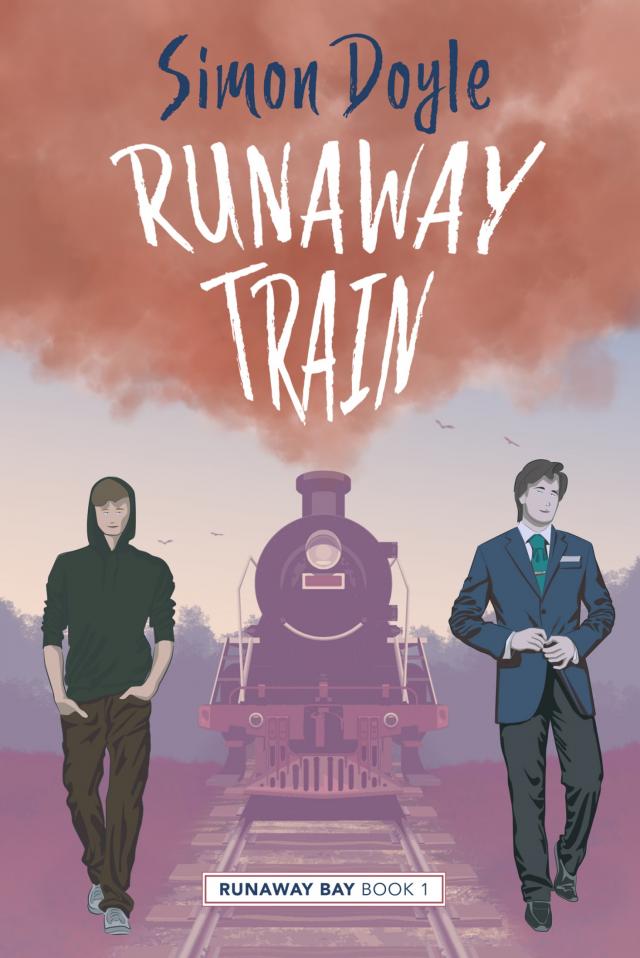
Runaway Train
Simon Doyle
SD Press
SD Press
A division of Nightsgale Books
1 3 5 7 9 10 8 6 4 2
Copyright © Simon Doyle, 2022
The right of Simon Doyle to be identified as the author of this Work has been asserted by him in accordance with the Copyright, Designs and Patents Act 1988
All rights reserved
First published in 2022 by SD Press, a division of Nightsgale Books, Suite 97320, PO Box 1213, Belfast, BT1 9JY
Paperback ISBN 978 1 7397276 0 4
This publication may not be used, reproduced, stored or transmitted in any way, in whole or in part, without the express written permission of the author. Nor may it be otherwise circulated in any form of binding or cover other than that in which it has been published and without a similar condition imposed on subsequent users or purchasers.
All characters in this publication are fictitious and any similarity to real persons, alive or dead, is coincidental.
Cover by SD Press
A CIP catalogue record of this book is available from the British Library and the Library of Trinity College Dublin
Typeset by SD Press
For Lucas.
Contents
1. Denis
2. Oliver
3. Denis
4. Oliver
5. Denis
6. Oliver
7. Denis
8. Oliver
9. Denis
10. Oliver
11. Denis
12. Oliver
13. Denis
14. Oliver
15. Denis
16. Oliver
17. Denis
18. Oliver
19. Denis
20. Oliver
21. Denis
22. Oliver
23. Denis
24. Oliver
25. Denis
26. Denis & Oliver
Coming Soon
About Simon Doyle
1
Denis
Denis Murphy didn’t wake up that morning wanting to end his life. That came later.
When the alarm on his phone tore him from sleep, he rolled over, smacked the phone into silence, and smiled. It was three days until Christmas and his old bed in Clannon Village was as good as a warm hug. His mum had cooked his favourite meal last night and his sister, Caroline, stayed home instead of working her shift at the local supermarket. It was like old times before he’d gone off to university in Dublin and forgotten what family comfort was like.
Mum was smiling, which was a rare sight.
Suicide wasn’t on his mind when she gave him one of his Christmas presents early, a black hoodie with the price tag ripped off and twenty Euros stuffed in the front pocket. “In case you want to go out with your friends tonight. First round’s on me.”
He pulled it on and kissed her cheek as she flipped the hood over his head with a laugh.
Throwing himself into Broad Meadow River—just like his dad had done eleven years ago—was the furthest thing from his mind while Caroline conjugated her Spanish verbs in advance of her mock Junior Cert exam in the new year. ”Yo estoy, tú estás, ella está.”
But then Mum asked that question over dinner, the one she asked every time they spoke on the phone, without fail, like an advertising jingle on a loop. “Have you met a nice girl yet?”
“Not yet,” he used to say. “There’s no one fit enough at uni,” he’d tell her with a smile in his voice so that she’d hear how jovial he was being about it.
Caroline coughed—because she knew—and hid her face with her glass of fruit juice. And her eyes blinked a Morse-code reminder that Mum wasn’t ready for the truth yet, in time with the blinking of the Christmas lights in the window.
But Denis couldn’t lie anymore. Not that he was dating anybody right now, but he was sick of hiding who he was. Everyone else knew—Caroline, his friends at UCD, and the grave of his father where he once left a letter for him and then went back an hour later and burned it in case Mum found it.
Caroline was the only one he never told; she just seemed to know.
“How many gays does it take to screw in a light bulb?” she asked him once, a couple of years ago.
He didn’t dare answer, and so he looked up from his book as she stood in his bedroom doorway with a massive grin on her face. She radiated childish innocence.
“Go away.”
“How many?”
“How many what?”
“How many gays does it take to screw in a light bulb?”
“I don’t want to know.” But he did.
“Just one,” she said. And then she walked away.
“That’s not even funny,” Denis called after her.
When she poked her head back around the frame of his door, she added, “But it takes an entire A&E department to remove it.”
He had thrown his book at the empty doorway in her wake and tried not to laugh when she shouted, “I’m not picking that up, Butt Bandit.”
So, that was that. Caroline had invited herself into his confidence and sworn never to tell a soul without ever saying the words out loud.
And here was Mum with her eyes fixed on Denis, one eyebrow curled into a question mark, as her fork rained garden peas onto her mashed potato and the weatherman on the TV behind her said, “I wouldn’t be expecting a white Christmas if I were you.”
The smile on her lips faltered before Denis even spoke. He took a gulp of wine to moisten his dried mouth, and he said the words he’d wanted to say for more than four years. “I think I’m gay, Mum.”
She placed her fork on the table beside her plate. When she stood up, the chair scraped a chill across the mottled linoleum that was worn thin in uneven patches.
“Mum?”
She picked up her plate. And she threw it against the wall.
It lay in pieces on the floor next to Denis’ heart.
Only when her hands were empty did she scream.
“He’s only joking, Mum.”
“Jesus, Mary and Joseph. You think you’re what?”
“Mum.”
“Get out.”
“Mum.”
“Mammy, please. He’s not serious.”
She leaned forward, her knuckles tense enough to bore grooves in the tabletop, and her face was white. Her jaw muscles were taut. “You better not be serious. May God forgive your lying soul.”
“Mammy,” Denis said, and he realised as he said it that he hadn’t called her Mammy in years. The truth was out. The pathetic tone of his voice said everything.
“Get out before I thump you. Jesus Christ, how will you ever get into Heaven? What kind of filth have you been introduced to in the city?”
Denis pushed his chair back from the table as she took a swing at him. He stomped up to his room, lifted his rucksack to the sound of his mother screaming and Caroline crying, and he shoved some clothes into it—clothes that he had only just unpacked the night before.
And he came back downstairs with pleading tears in his eyes. “Mammy. Please. Can we talk about it?”
But she hit him. She hit him in the face with the back of her hand. “I brought you up as a Christian and this is how you repay me?”
“No, Mum,” he said, and his voice splintered, tearing her name in two.
“Get out.”
“Denny, go back upstairs,” Caroline said.
“Get out.”
“Mammy, please.”
“Out.”
And he got out. He stood on the doorstep as the automatic porchlight blinded him and then dimmed, casting him in darkness more complete than his sadness.
Mum was screaming behind the door. He could see the blur of her in the frosted glass, and Caroline trying to calm her down. And he scraped his knuckles down the brickwork just to feel something other than disparaging sorrow.
His mother shrieked through the door, “I wish you were never born.” Denis saw Caroline pull her back from the glass. “I’d sooner he confessed to murder than tell me that,” Mum’s muffled voice said.
Denis kicked the garden gate and walked away.
He wasn’t thinking about suicide as he marched up the street and around the corner, passed the park where a lone dog barked. He just couldn’t get a proper hold of his breath, and the weight of the rucksack on his back, even though it only contained a few items of clothing, was crippling. His high-tops were mired in the quicksand of solitude.
“Happy Christmas,” he heard someone say nearby, but he didn’t raise his head. He trudged farther up the hill where the streetlamps got less frequent and the graffiti on the gable walls was cruder. The village’s Christmas decorations didn’t extend this far. He passed Clannon Village’s only supermarket, where Caroline had been working part-time for almost six months. She was saving up for a trip to France with her Junior Cert friends when they were finished with their exams that coming summer.
Glistening frost blanched the inner edge of the pavement, and the yellow glow from the streetlamps was weak and humble.
He hadn’t decided where he was going as he came around the corner at the top of Main Street and stumbled down the grass bank beside the humpback bridge and across the playing field which was dark and childless. The goalposts at either end stood like retracted staples, listing in their broken isolation.
He fought his way through the thick gorse bushes that ringed the field, and he followed the track half a kilometre downriver to the footbridge. When he stood above Broad Meadow River, watching the dark churn of its current fourteen feet below, he still wasn’t considering ending his life.
He was thinking about his father, who jumped from this very spot eleven years ago and was found washed up on shore just north of Swords, two and a half kilometres southeast of here. Andrew Murphy scribbled a note on the back of an envelope, walked the half-kilometre from their home to the bridge, took his shoes off, rolled his socks into a ball, and left them there like a monument, a neat reminder of his passing.
It got that Denis forgot what his father looked like most of the time. He’d been eight when it happened. He’d blamed his mum, just as he blamed her now.
I wish you were never born.
When his hands gripped the high railing and his foot slotted into one of the open rungs of the iron siding, that was the first time he acknowledged the thought of ending it all. Her words punched around in his mind. I wish you were never born.
So did he.
His foot slipped in the frost and his fingers tightened on the railing.
She’ll see. If he was gone, she’d be sorry. She’d lose her son as well as her husband.
He shouldn’t have told her. Caroline was right; Mum wasn’t ready. But it was too late. You can’t go back in the closet once you’ve opened the doors.
It was over. She didn’t want him. His own mother refused to accept him. He was adrift in a sea of pain, a world without a family.
I wish you were never born.
Dad was gone. He would have fixed everything. Mum would’ve listened to him.
Denis strengthened his resolve, put his foot back in the groove, and stepped up. But he thought about Caroline. She was five when she’d lost her father—too young to remember much about him but old enough to know he was never coming back. Denis had had to comfort her for months while their mother wasn’t fit to do anything. Caroline crawled into bed beside him, clinging to her stuffed rabbit, and cried herself to sleep every night.
I wish you were—
“All right, Denny?”
Denis came down off the railings and he nodded, blinking away his tears. Tom McInnis was at the far side of the footbridge, coming towards him. Denis and Aaron, Tom’s younger brother, were in the same class since Juniors, and Denis had been fantasising about Tom for years. He’d buy them beers when they were fifteen and let them use his PlayStation when he wasn’t around.
At twenty-two, Tom was a little over six feet tall and had the chiselled good looks of a movie star and the slick, greasy image that came with his job at Al’s Garage.
“All right?” Denis responded. He picked up his backpack as if he’d just stopped to tie his shoelace, not throw himself off the bridge.
“Jeez, it’s cold. Where are you headed?”
“Just hanging around.”
He heard the distant whistle of an old steam engine. The sound was so out of place that Denis waited to see if it would break the night again.
He watched Tom watching him.
“Shit,” Tom said, “I’m going to be late.” He punched Denis on the shoulder in solidarity and continued his journey over the bridge. “You coming?”
“Where?”
“Didn’t you hear it? There’s a luxury steam train on its way to Belfast. It’s going to be full of booze and women, and when you put the two together, you know what that means.”
“Tom.”
“Come on, lad. You’re doing nothing else, are you?”
When Denis didn’t move, Tom came back.
“Oh, bollocks. Sorry, man. This is the spot where your dad—look, you’ve got a minute to pay your respects. I’ll turn my back, so you’ve got privacy. But in sixty seconds, I’m dragging your ass onto a luxury train. No arguing.”
The unseen steam train whined into the night with the long, high drawl of its whistle.
Denis’ confusion settled into a storm in his stomach. “See you, Dad,” he said, as he kissed his fingers and pressed them against the railing.
“Come on,” Tom said.
They fought their way back through the bushes and ran across the field.
By the time they got to the small, squat station at the top of Main Street, the sound of the train was loud, and they could see smoke chugging into the darkness of the distance.
Denis looked around. The station was filled with well-dressed families with matching luggage and as they weaved through the crowd towards the platform—there were no ticket barriers on the northbound track—Denis considered turning around and camping out on the bridge with the memory of his father.
Tom pulled his sleeve. “This way.” And the crowd pressed forward as the front of the train came into view.
“Here she comes,” someone said.
Smoke swelled in the distance, and as the train screeched closer, a cheer rose across the platform.
Denis craned his neck for a better view. Rolling into the station was the most magnificent steam train he’d ever seen. It gleamed black and red, like something from a children’s fairy tale. Thick grey smoke billowed around them, and the smell of burning coal swept ahead of its arrival.
The train’s brakes screeched and whined as the crowd applauded. Tom whistled, putting his dirty fingers in his mouth. Denis liked that Tom didn’t care about the grease from his job as a car mechanic; it added to the allure. He often imagined those oil-smeared hands touching him.
Denis watched as each carriage rolled by. The interior lights glowed like the warmth of heaven as happy faces stared out towards the crowd.
“Do you have a ticket?” Denis asked.
“Don’t need one.”
“We’re sneaking on?”
Tom winked, and the smear of oil on his cheek glistened.
When the train came to a stop, each carriage door opened in time, rattling down the platform from front to rear. Inspectors in forest-green uniforms alighted with their ticket punchers and beckoned the new passengers forward.
The P.A. system blurted to life and a distorted voice said, ”The Duchess of Dublin welcomes you on board. Sleeper carriages are clearly marked throughout the train. Please have your tickets ready for inspection. The forward three carriages are economy class. Please make your way to the forward carriages for passengers with a yellow ticket. The oversized luggage car, marked as Carriage M, is situated at the rear.”
“Come on,” Tom said, slapping Denis’ back. He led him down the platform.
The crowd jostled forward, and Denis kept his head low, with his hood up. He followed Tom toward the rear of the platform behind a couple in their forties. If anyone was looking at them, they would think they were their surly teenage sons, not would-be stowaways.
At the dedicated luggage carriage, the train attendant took a woman’s enormous suitcase and tried to heft it up the two narrow steps into the train. As the woman turned away, Tom jumped forward. “Let me help you with that.”
He took the other side of the case and pushed as the attendant backed into the train.
“You got it?”
“I got it,” the man said.
When he turned deeper into the carriage, Tom grabbed Denis and pushed him onboard. “Quick. Get down.”
Denis squatted between a large wooden crate and the train’s wall, and he held his breath. He had no idea why a hundred-and-twenty-year-old steam train had pulled into Clannon Station, or why Tom felt the need to sneak on without a ticket, but the oil-stained older man was a distraction from his misery.
I wish you were never born.
Denis didn’t care anymore.
When Tom hunkered into place beside him, Denis could smell the thick, cloying headiness of his aftershave.
Their legs touched. “Scooch up a bit.”
He obeyed, moving back as far as he could. He was on a train to Belfast, cramped in the dark confines of a luggage carriage, and he no longer thought about what his mum wished.
Tom smiled and his breath was warm on Denis’ face. “Got enough room?”
“Yeah.”
Denis felt the train thrum beneath him and someone on the platform blew a whistle.
The Duchess of Dublin lurched forward.
2
Oliver
“Turn it off,” Oliver said. He knew what the news story was about, and he didn’t care for it.






